Role
UX/UI Designer and Researcher
Duration
Tools


Background
Spotify is the top music streaming service, with over 400 million monthly active users. Its goal is to offer a convenient way for people to access music anytime, anywhere.
To maintain its leading position, Spotify aims to increase user engagement and retention on its platform by improving the social features it offers.
The Challenge
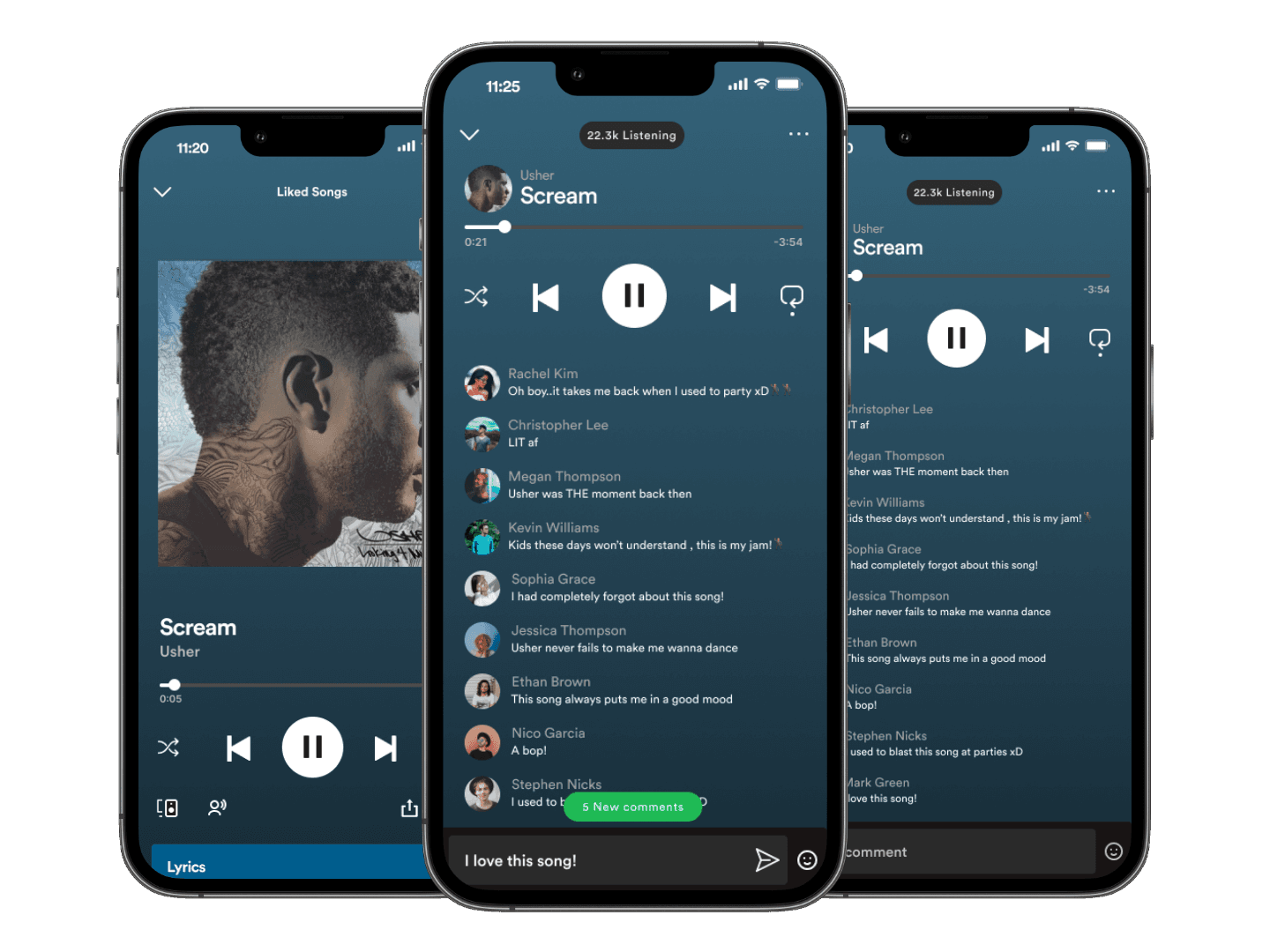
Develop a feature to boost user engagement by creating a space for users to express their thoughts about music, enhancing the platform's social capabilities.
The Outcome
A feature that fosters community by enabling users to connect and chat about music, increasing engagement and retention while making the listening experience more interactive.
Research
Exploring Spotify’s Social Features
The project began with an in-depth exploration of Spotify’s background and recent statistics. Interestingly, over 70% of users are Millennials (born 1981-1996), and more than 90% access the platform via mobile devices. The user base is nearly evenly split, with 56% male and 44% female.
With this data, I set three objectives for my research:
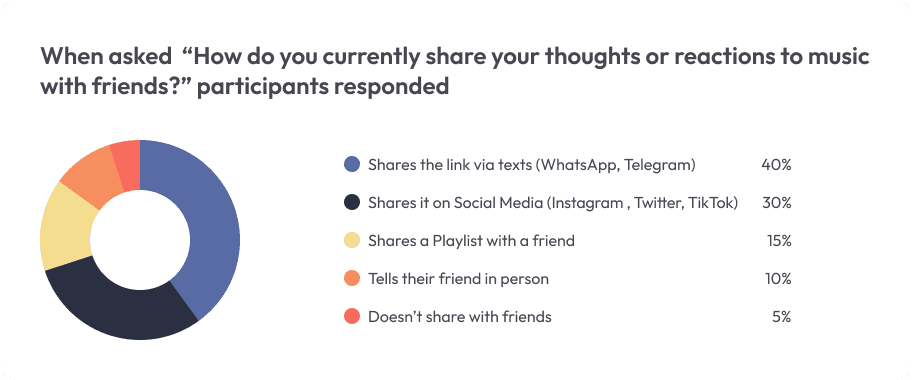
Understand how users share their thoughts on music with friends.
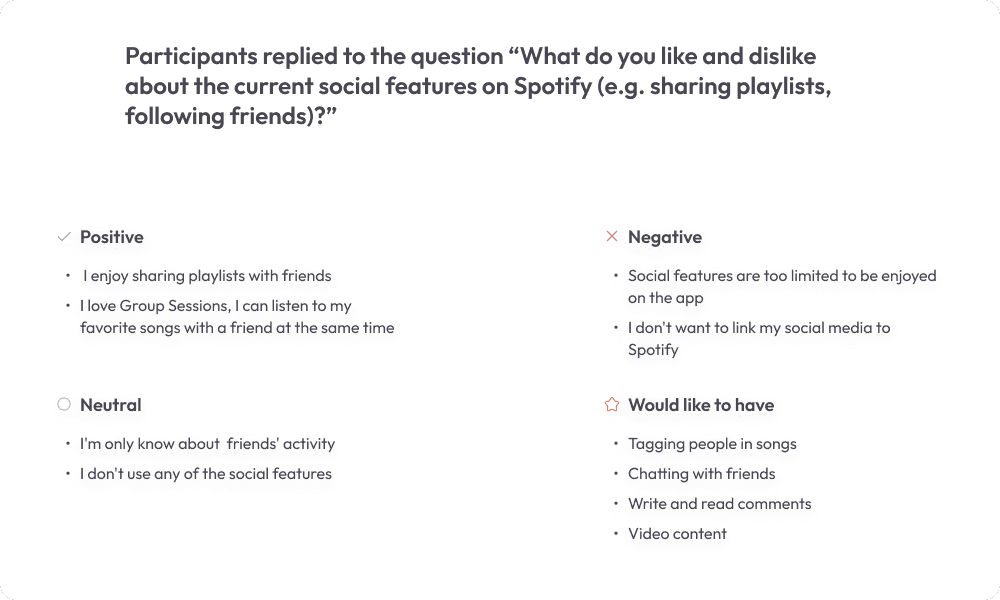
Identify user likes and dislikes regarding current social features.
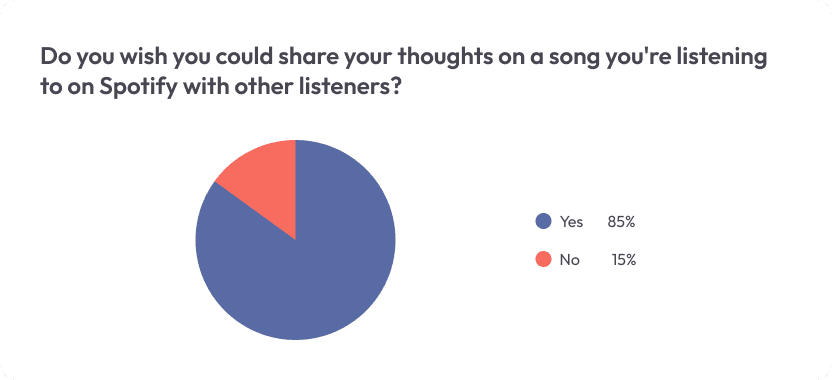
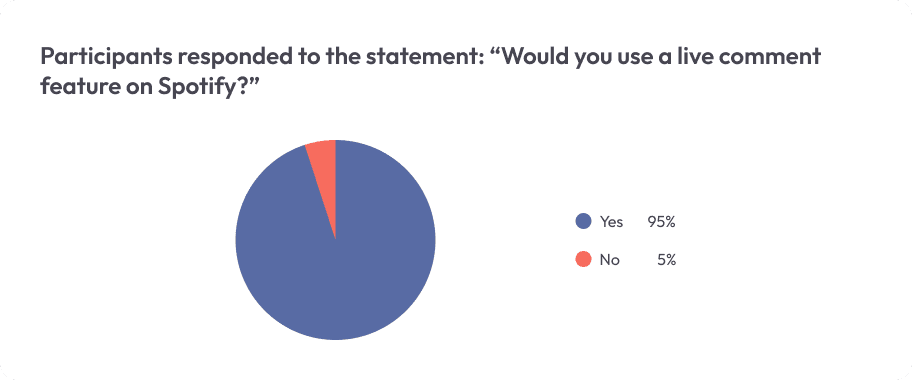
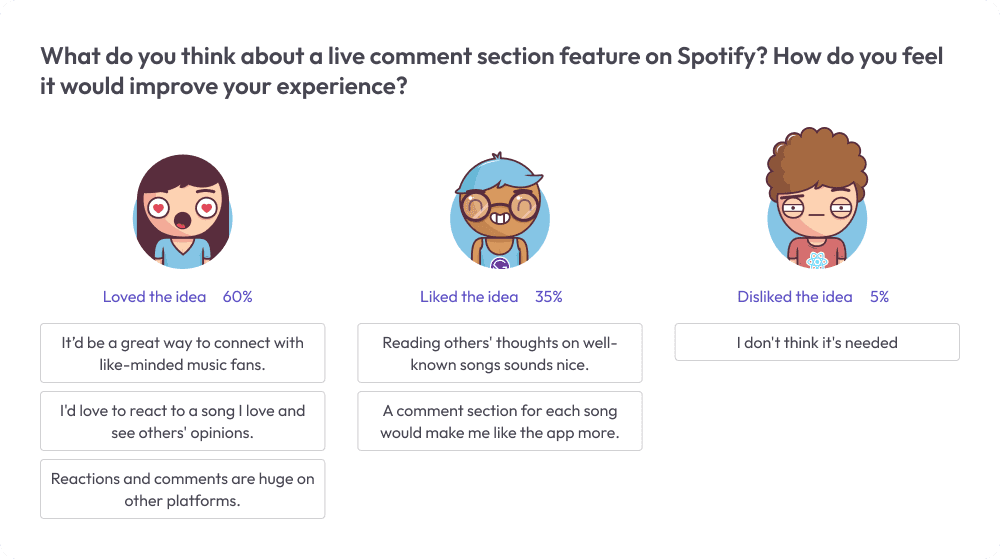
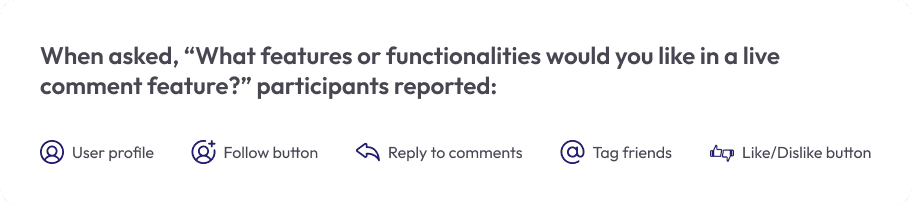
Assess the potential of a live comment feature to enhance the social experience.
To gather direct insights, I surveyed 20 daily Spotify users aged 18 to late 30s. This approach provided valuable, first-hand information from the target audience.
Click to expand
Click to expand
Click to expand
Click to expand
Click to expand
Click to expand
defining the problem space
Synthesizing the Insights and Defining the Problem
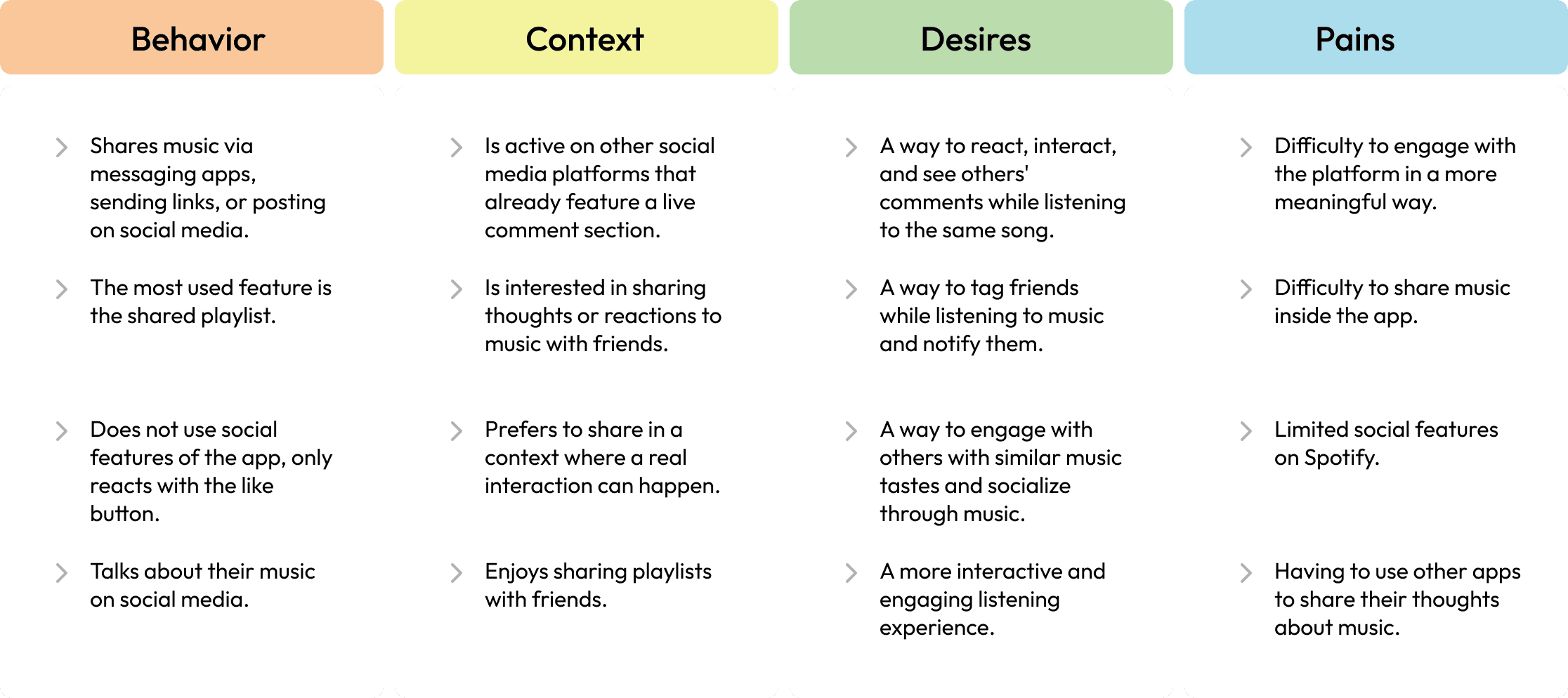
The findings gathered from the survey were used to create an affinity diagram to get a clear idea of the user’s context, pains, desires and behavior.
Click to expand
Insights:
Users enjoy sharing their thoughts and preferences about music with friends.
Users rely on other apps to share their music with others.
Users spend time on other platforms where engaging with others is possible.
Needs:
A convenient way to engage with others on the platform.
To know what others think about their favorite songs.
Away to have a more immersive listening experience.
Creating User Personas
Following the insights and information from the research phase, I synthesized it to create two user personas that embody needs, behavior, thoughts, frustrations, and context that would help guide the design process.
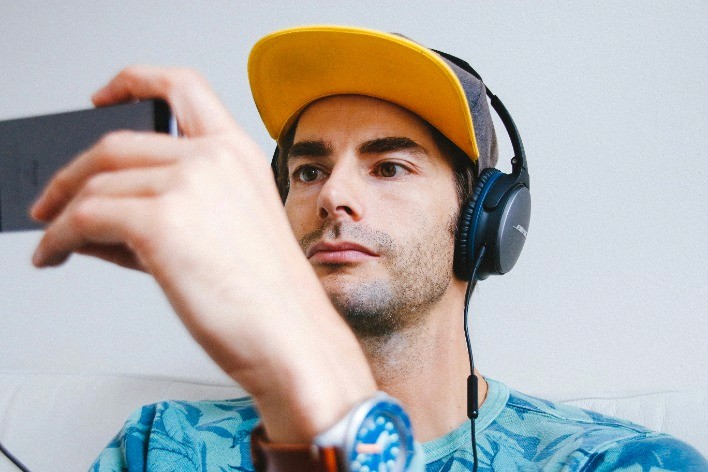
Learn more about Mark
"Connections matter to me, and I believe music brings people together."
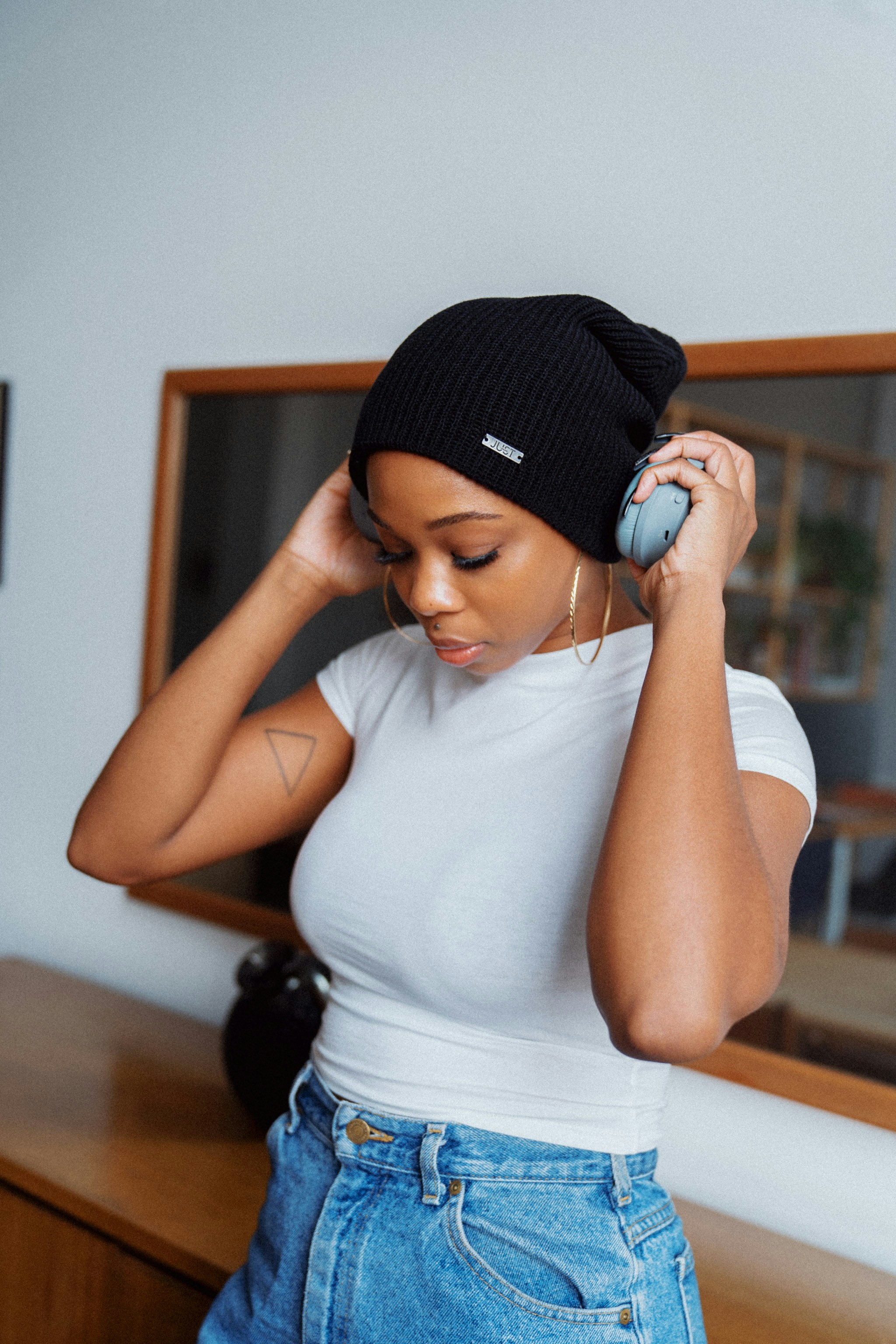
Learn more about Jessica
"Music is a big part of my life, and I want to connect with other listeners and feel part of a community."
Defining the Problem and the Design Goals
After defining the user personas, I crafted How Might We questions to guide the design phase and establish the project’s design goals.
How Might We ...?
How might we provide Jessica and Mark with a more immersive and satisfying listening experience that allows engaging with others in-app, so they don't have to rely on other platforms?
How might we help Jessica and Mark share their thoughts and know what others think about their favorite music?
Design Goals
Provide Jessica and Mark with an in-app space where they can have a more immersive, socially engaging and satisfying listening experience.
Produce a solution that is highly learnable and fitting with the current design to avoid interferences with the overall flow.
IDEATION
Translating Insights into Ideas
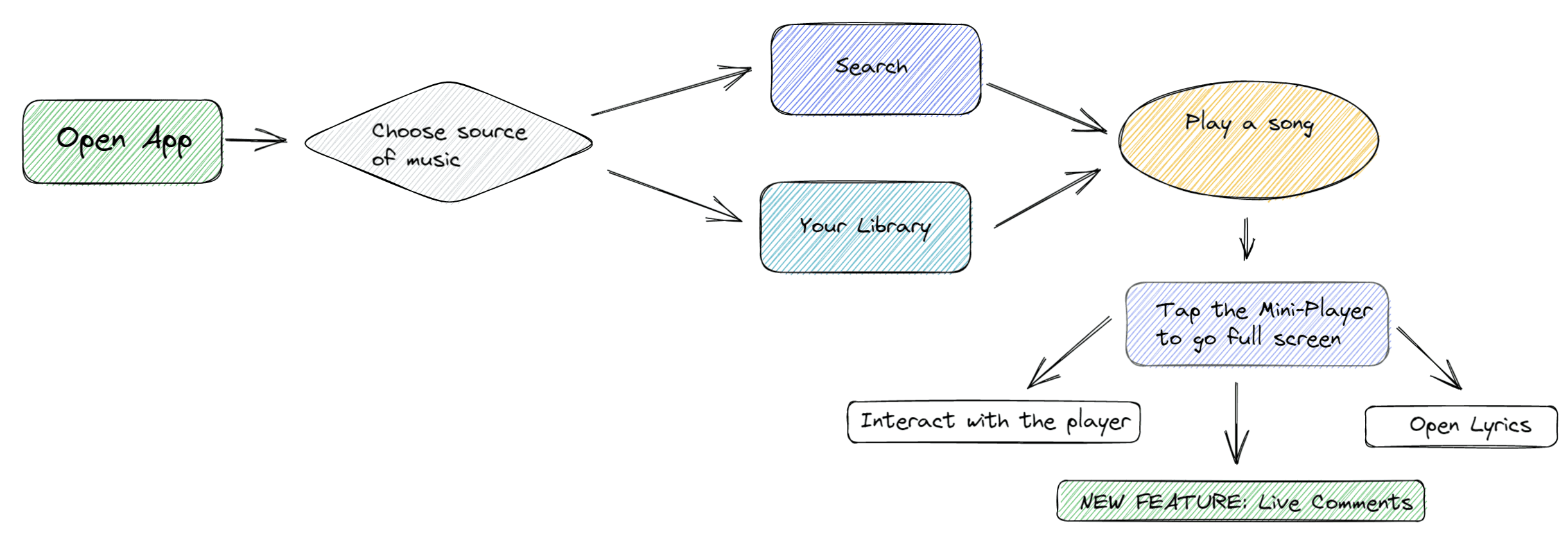
To determine where to locate the new feature, I designed a task flow that would help me visualize and identify the steps Jessica and Mark take to listen to music on Spotify so that I could choose a clear place for the solution, as it is an existing product.
Sketching
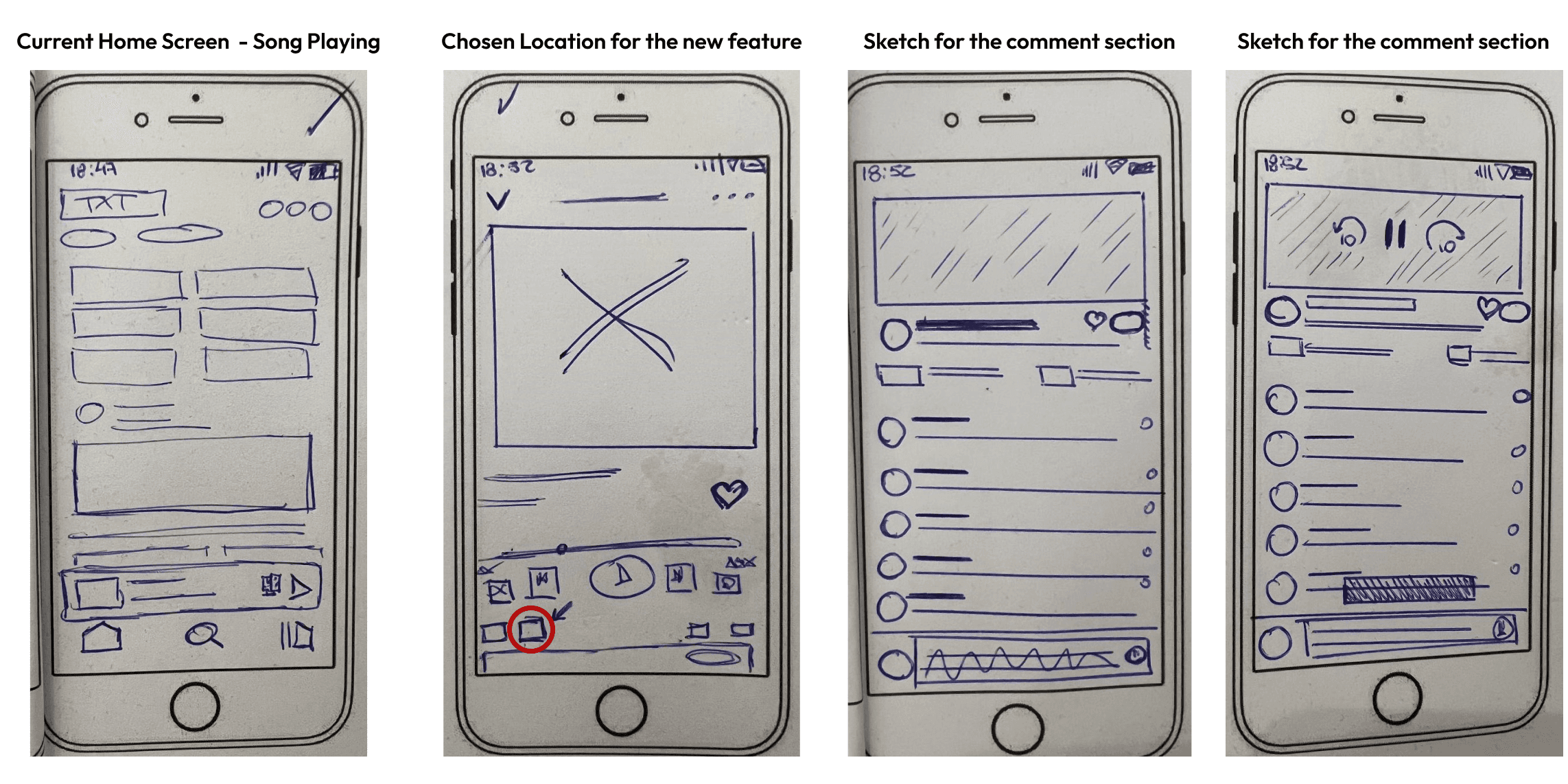
To evaluate the placement of the new feature within the existing flow, I sketched low-fi wireframes of the current listening section along with an initial approach to the solution. This process gave me a clearer understanding of how users would interact with the feature before advancing to the hi-fi wireframes.
Click to expand
I tested these sketches early on with four daily Spotify users. They were all able to locate the new feature and provided valuable insights and ideas that helped me refine and iterate the design.
prototyping
Improving the Wireframes to a High Fidelity Prototype
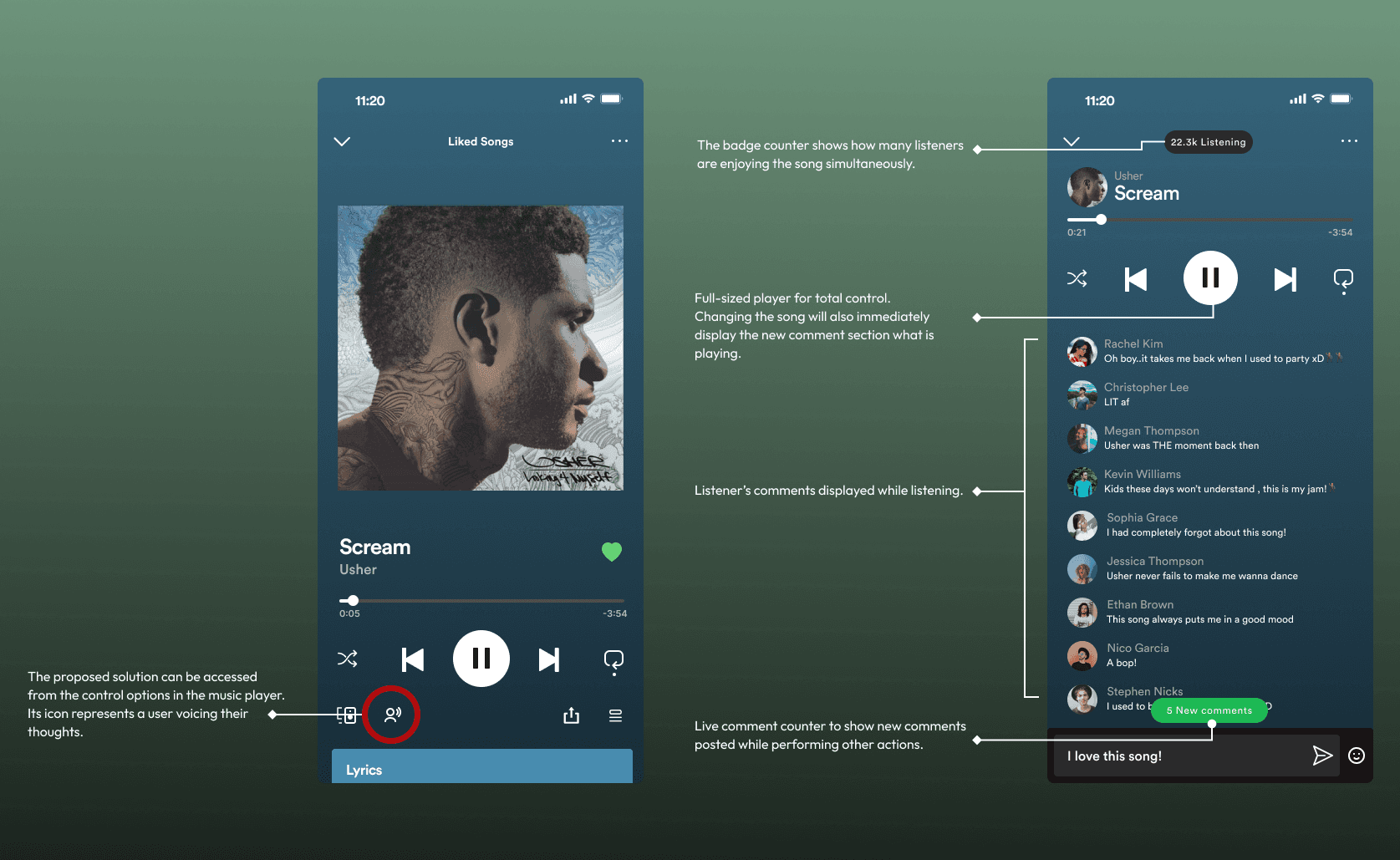
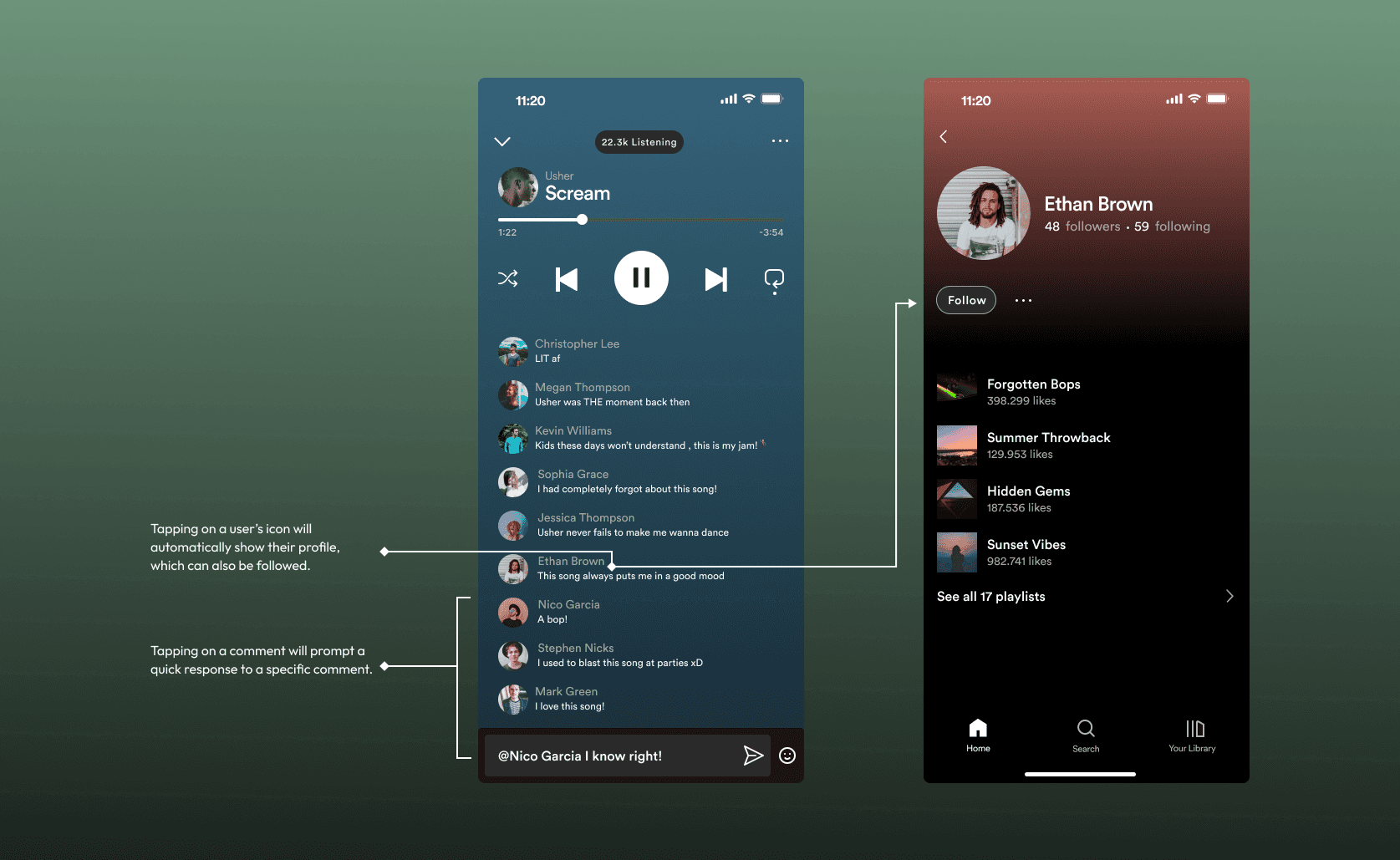
Next, I turned my low-fi wireframes into Hi-Fi prototypes. Below is the finished version of the solution as conceived during the previous stages of the design process.
Click to expand
Click to expand
Validating the design
Testing and Validating the Solution
I conducted usability testing with a clickable prototype, involving four daily Spotify users aged 18 to 35. Participants performed specific tasks to validate the design and its features. Two tests were conducted in person, while the remaining two were done online via Discord with a prototype link provided.
Test Results:
All participants successfully located the new feature
All participants successfully added a comment to a song
All participants successfully replied to a comment
All participants successfully accessed another user's profile and followed them
Conclusion
Takeaways and Conclusion
Working on this project highlighted the challenges of integrating new features into an established platform. Users are accustomed to the current flow, so balancing new additions without disrupting the familiar experience was both challenging and educational.
As designers, our greatest reward is seeing the impact of our work. It’s gratifying to know that users appreciate the solutions we've created.
With more time, I’d explore adding a messaging feature. This enhancement, highly requested by users, would add significant value to the Spotify experience.
Thanks for reading - feedback is welcome
NOTE: This is a personal project. I do not work for, nor am I affiliated with Spotify in any way.